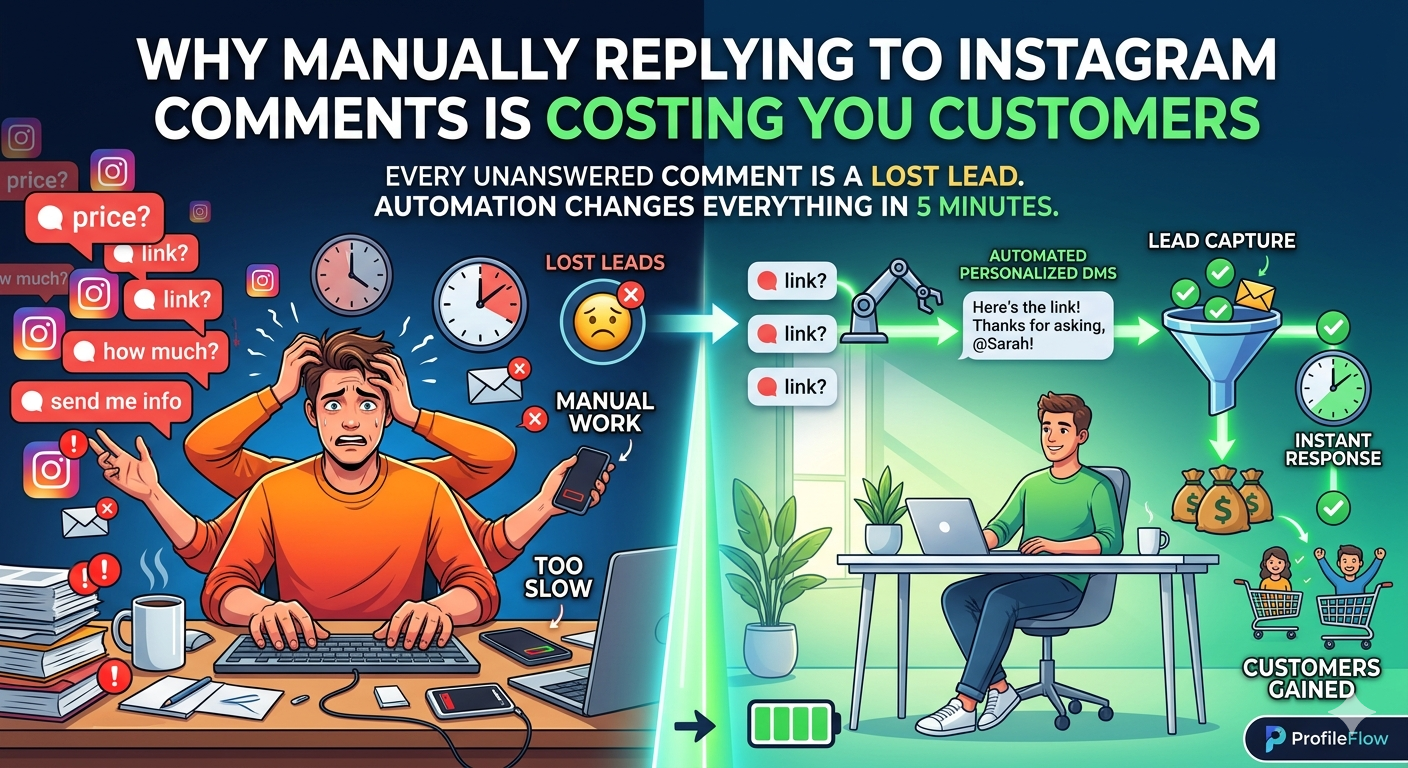
Picture this: you post a Reel that takes off. In the first six hours it gets 400 comments. A third of them say some version of "where can I get this?", "send me the link", or "how much does this cost?"
You reply to the first fifteen manually. Then your phone dies. Then you sleep.
By the time you get back to the other 120 qualified comments, it's been 14 hours. Most of those people have already bought something else, moved on, or simply forgotten they asked.
This is not a time management problem. It's a structural one.
The Math Nobody Talks About
Let's put real numbers on this.
The average Instagram Business account receives 47 comments per post on content that performs above average. Of those, research from Meta's own Business Insights suggests roughly 28–34% contain a purchase intent signal — a question about price, a request for a link, or a direct ask for more information.
That's 13–16 potential customers per post asking to be converted.
Now factor in response time. Harvard Business Review found that companies responding to leads within one hour are 7 times more likely to qualify that lead than those who respond even one hour later. After 24 hours, the probability of a meaningful conversation drops by over 60%.
On Instagram specifically, the window is even tighter. Meta's messaging policy only allows you to send the first outbound DM within 24 hours of a user's last interaction with your account. Miss that window and you cannot initiate the conversation at all — even if you wanted to.
So the question isn't just "how fast can I reply?" It's "can I reliably reply to 13 qualified people within the hour, every single time a post performs well?"
For most creators and small brands: no.
What Manual Replies Actually Look Like at Scale
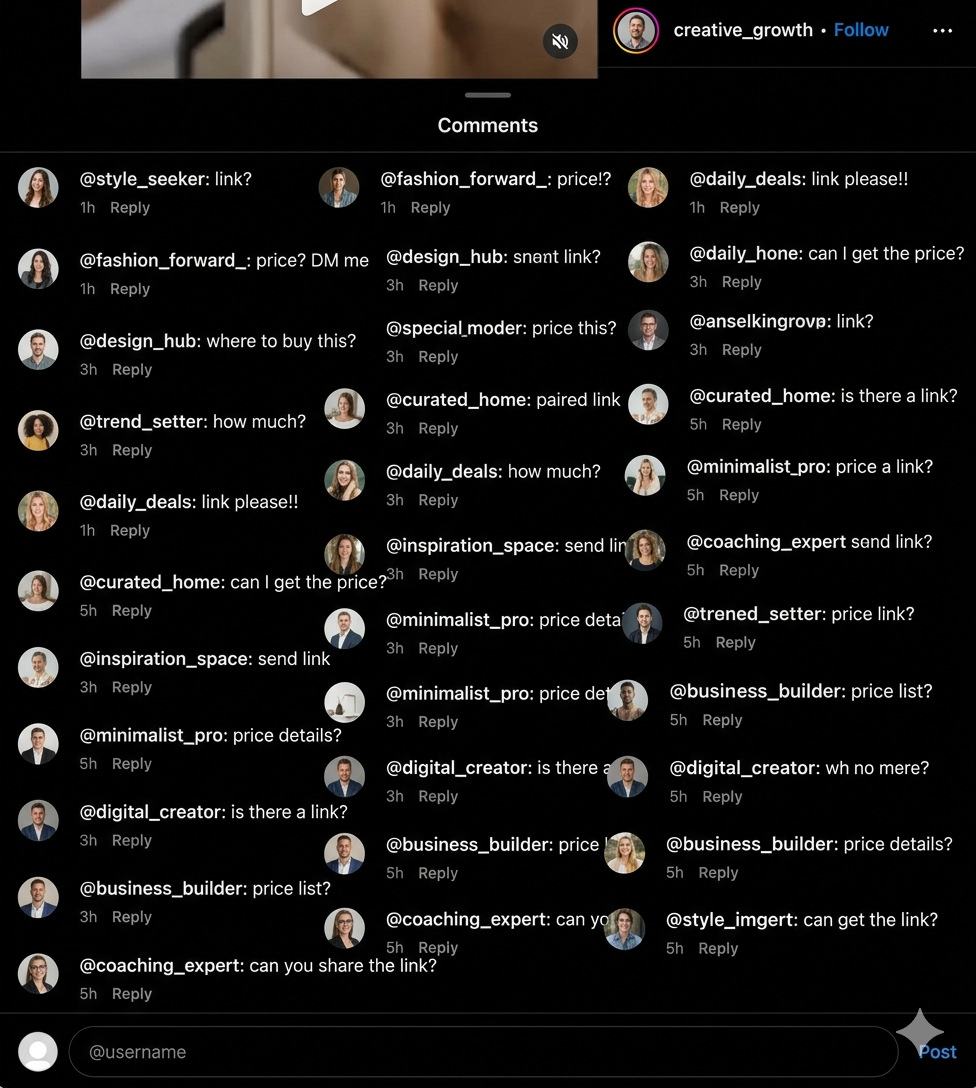
Here's what the manual reply workflow looks like in practice:
For a solo creator posting 4x per week:
- Average 47 comments per post × 4 posts = 188 comments per week
- 30% purchase intent = ~56 qualified comments per week
- Average manual reply time: 2–3 minutes per comment (open app, read, type, send)
- Total time on manual comment replies: ~2.5 hours per week
That's before you factor in the replies that need follow-up ("what size do you have?", "is it available in blue?"), the DMs that get missed because you didn't see the notification, or the comments on older posts that continue to generate leads weeks after the original publish date.
Now scale to a brand with a social media team. You're paying a human to sit in Instagram's comment section manually typing "check your DMs!" fifty times a week.
The problem compounds at every level of growth. A creator with 10,000 followers manages this badly. A creator with 100,000 followers simply cannot manage it at all.
The 24-Hour Window: Meta's Hidden Revenue Leak
This is the part most creators don't know about.
Instagram operates on what Meta calls a 24-hour messaging window. When someone comments on your post or sends you a DM, you have 24 hours from their last message to send them a follow-up. After that window closes, Meta blocks outbound messages to that user until they interact with you again.
This rule exists to prevent spam. But it creates a brutal clock for anyone trying to do manual follow-up.
Here's the scenario that plays out constantly:
- Someone comments "price?" on Thursday at 2pm
- You see it at Thursday 9pm — 7 hours later
- You reply publicly: "Check your DMs!"
- You get busy and don't actually send the DM until Friday at 3pm
- The window has been open for 25 hours
- Meta blocks the message
The follower never hears from you. They assume you ignored them. They buy from someone else.
The gap between "I saw the comment" and "I sent the DM" is where most of the revenue leaks out.
The Creator's Dilemma
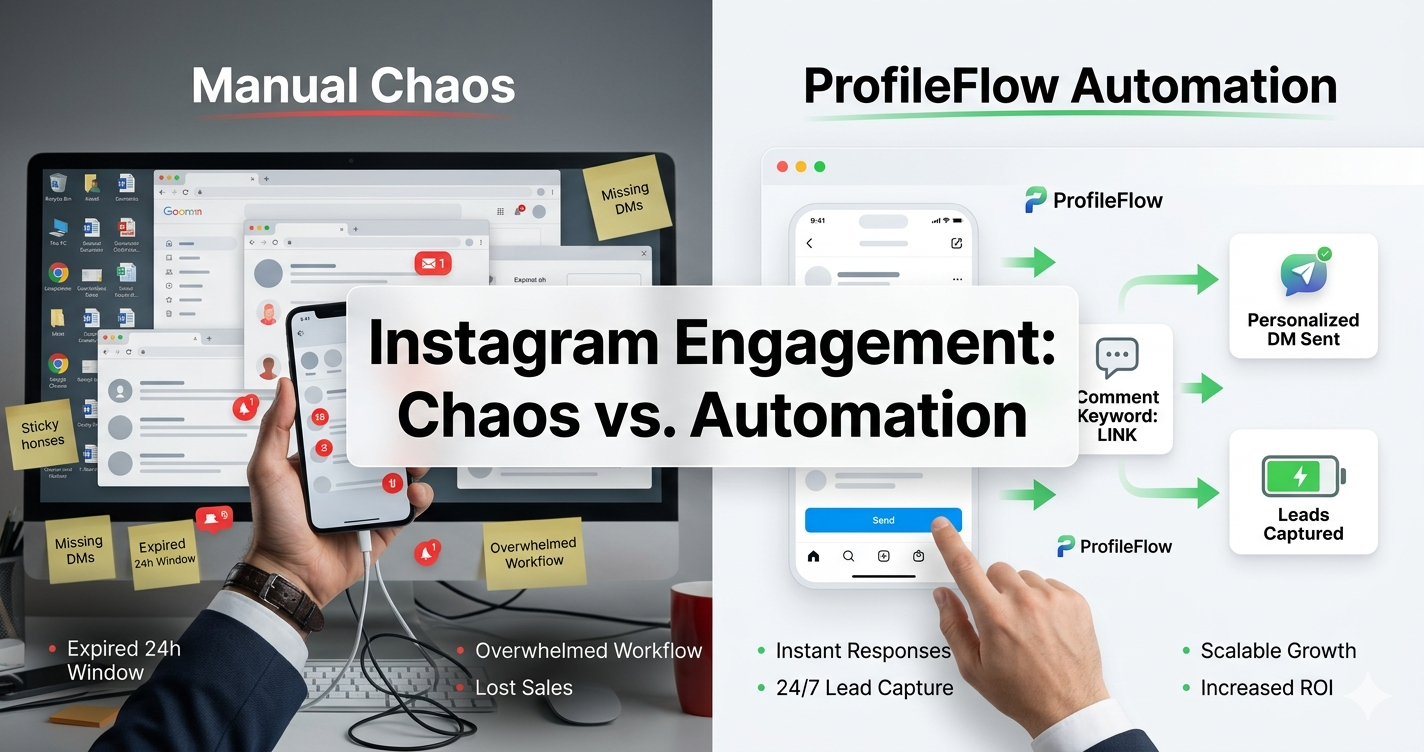
Growing an Instagram following creates a paradox. The bigger your audience, the more engagement you get. The more engagement you get, the more leads appear in your comments. But also the more impossible it becomes to personally respond to all of them in time.
Hiring a VA helps, but doesn't fully solve it. A VA can reply to comments during their working hours. They can't reply at 3am when your Reel gets picked up by the algorithm. They can't reply instantly to 47 comments simultaneously. And they cost money every month regardless of how much your content performs.
The creators who scale past this wall — who turn a 100K following into a real business with predictable lead flow — almost always have some form of automation handling first-contact responses.
Not because they're lazy. Because speed and consistency are impossible at scale without it.
What Changes When You Automate First Contact
Let's go back to the 400-comment Reel.
With an automation rule in place:
- Comment received at 2:14pm: "where can I buy this?"
- DM sent at 2:14pm: "Hey Sarah! Thanks for asking — here's the link: [URL]. Let me know if you have questions!"
- Response time: under 5 seconds
You're asleep. You're in a meeting. You're filming your next piece of content. Doesn't matter — every person who raises their hand gets a response before they've had time to forget they asked.
The numbers bear this out. Businesses that respond to leads within 5 minutes see conversion rates 9x higher than those responding within 10 minutes. When first contact becomes instantaneous, you're not just being faster — you're catching people at the exact moment of maximum interest.
And the compounding effect matters. Posts from six months ago still generate comments. Old Reels still surface in the algorithm. Evergreen content keeps sending leads long after you've stopped thinking about it. Manual replies on old posts are practically impossible — automation handles them the same as posts from today.
What Good Automation Looks Like (and What It Doesn't)
There's a version of Instagram automation that feels spammy — bulk follow/unfollow bots, generic "Thanks for following!" DMs, comment pods. That's not what we're talking about.
The right approach has three properties:
1. Triggered, not blasted The DM fires because a specific person did a specific thing (commented a keyword). It's responsive, not broadcast. The follower asked — you're answering.
2. Personalised at the point of contact The message uses the commenter's username, references what they said, and delivers something genuinely useful (a link, a resource, a direct answer). It doesn't feel like a mass email.
3. Conversation-capable, not one-shot Good automation opens a conversation rather than closing one. Ask a question back. Offer options. Capture an email. A follower who responds is a lead. A lead who gives you their email is a subscriber. A subscriber is someone you can reach outside the algorithm forever.
The Bottom Line
Every unanswered comment with purchase intent is a customer who paid attention, raised their hand, and then left.
At 13 qualified comments per post, 4 posts per week, and a 7x conversion lift from fast responses — the math on what manual replies cost you compounds quickly. For most creators and small brands, the gap between "I could have sold this" and "I did sell this" is measured in minutes.
The fix isn't working harder or hiring faster. It's making sure no one who raises their hand waits more than a few seconds for a response.
ProfileFlow automates your Instagram comment responses with keyword-triggered DMs, lead capture funnels, and a visual flow builder — no code required. Your first automation rule takes about 5 minutes to set up.